
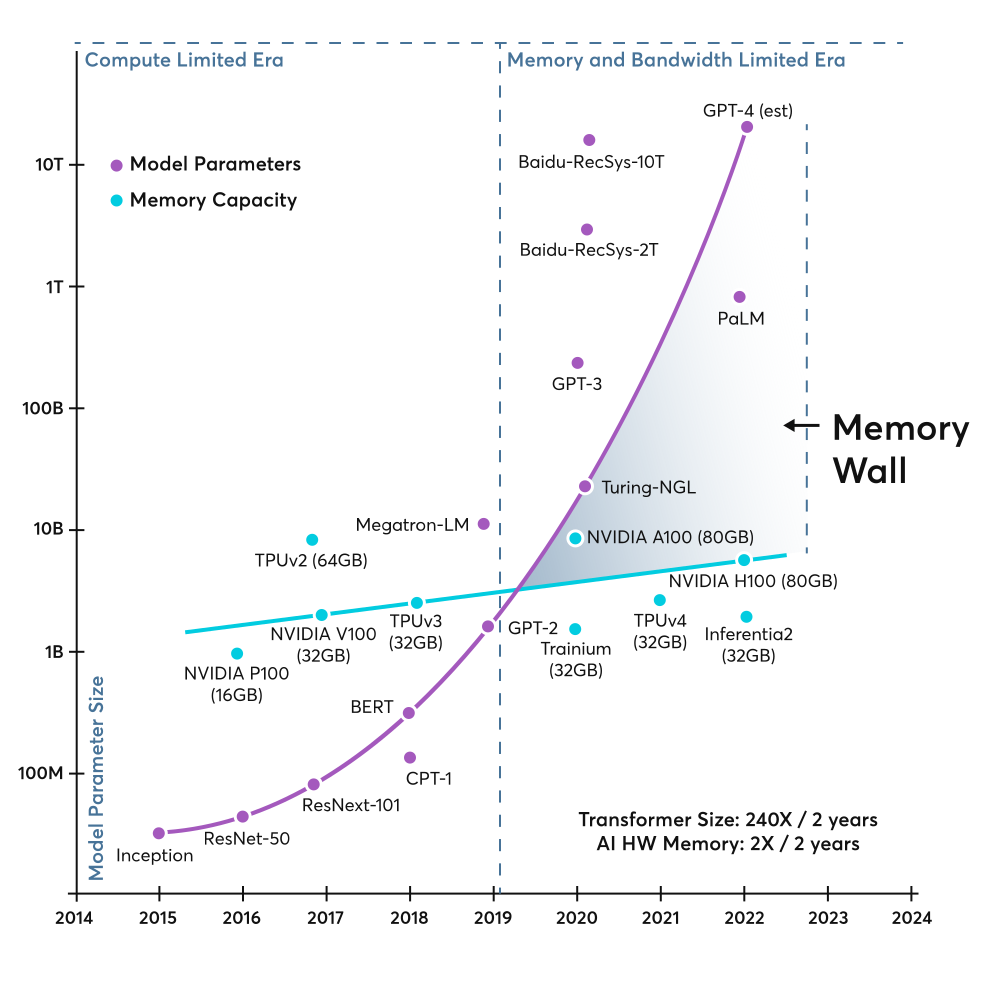
What is the memory wall? The growing disparity between processor speed and memory bandwidth that limits system performance in computing.
The memory wall refers to the increasing gap between processor speed and memory bandwidth, where the rate of improvement in processor performance outpaces the rate of improvement in memory performance due to limited I/O and decreasing signal integrity. This disparity limits the overall system performance, as the processor spends more time waiting for data from memory, leading to a bottleneck. The memory wall is a significant challenge in performance-intensive computing, such as artificial intelligence (AI) and high performance computing (HPC) applications.
Related:
In-package optical interconnects enable new generative AI architectures | Article
Advancing the Next-Generation of AI: The Evolution of Optical I/O with the SuperNova™ Light Source | Blog
Ayar Labs Optical I/O: Shattering the Barriers to AI at Scale | Video
In-Package Optical I/O for Generative AI Architectures | White Paper
AI and Memory Wall | White paper
Memory-wall problem | Article
Generative AI and memory wall: A wakeup call for IC industry | Article