Big tech spends more than $1 trillion on AI infrastructure — additional $745 billion expected to be added to the figure in 2026 alone
Would these massive investments return an even greater profit?
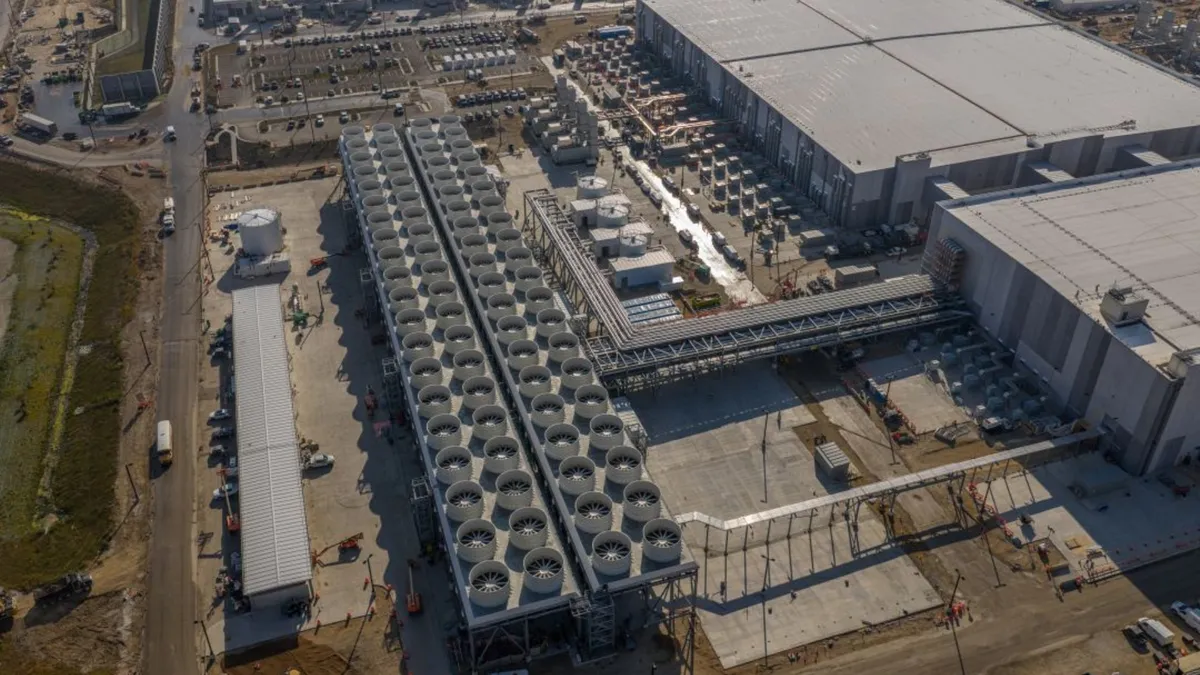
Amazon, Google, Meta, and Microsoft have spent more than a trillion dollars on AI infrastructure, including data centers, the chips inside them, and the power needed to run the facilities, since 2023. The Financial Times said that these four big companies have already hit $1.1 trillion in capital expenditure based on their latest earnings reports, and that an additional $745 billion is expected to be added to this figure just this year.
“There is basically no end in sight for the growth in capex,” RBC Capital analyst Rishi Jaluria told the publication. “Investors need these companies to toe the tight line between investing in AI and not compromising the things that have made them successful.” This massive investment has upended several other industries — namely electricity prices and memory and storage chips. The massive power demand that data centers have put on the power grid has forced many U.S. utility companies to spend billions of dollars to upgrade their respective infrastructure, which they then passed on to all consumers, not just the big ones that forced the upgrade.
This, alongside other environmental issues, has caused many Americans to push back against data center projects near their communities. The White House instituted the “ratepayer protection pledge” and made AI hyperscalers, utility operators, data center companies, and individual states promise that they will protect the average consumer from electricity cost increases. But so far, no state has taken a step to codify this pledge into law. Oregon actually enacted the POWER Act, which resulted in a 30% increase in the power bill of users that consumed more than 20MW while slashing the bills of residents by 1.3%, but the state did this in 2025, way before President Donald Trump called the tech giants into the White House and told them to “pay their own way.”
The mountains of cash that these tech giants are pouring into AI are also affecting the memory and storage chip industry. Since these AI hyperscalers have a lot of liquidity from investors, they are willing to pay top dollar for the HBM they need to run their data centers. Because of this, it made sense for Micron, Samsung, and SK hynix to prioritize them over DRAM, especially as they can charge a premium for these chips and there are customers who are willing to pay at those prices. This resulted in a shortage of consumer memory that started in 2025 — while this initially affected PC builders and enthusiasts, it has started to affect other industries that require memory as well, including cars and smartphones. Even Apple, which historically had huge sway over its suppliers, was forced to increase prices because of the shortages.
Aside from skewing other industries, the massive CAPEX the big four are going into is alarming some experts, warning that the promises and contracts they’re making are leading to “hidden debt” not listed in their balance sheets. The amount, worth around $1.65 trillion, is annotated in their quarterly financial statements as future obligations that will only come into play as the related asset or service comes online. The current value is 122% of the actual debt reflected on their balance sheets, which could give investors the wrong impression that they have fewer obligations than they actually have.
While the amount of money that the big four are spending on AI might seem dizzyingly high, we must note that these companies are raking in massive amounts of cash quarterly themselves. Microsoft’s latest quarterly revenue is $90 billion, while Meta made $60 billion in the same period. Alphabet (Google) announced revenue of nearly $120 billion, while Amazon made $200 billion. That is a total of nearly $470 billion for these companies in just the last quarter.
Still, that does not mean that they can just keep on spending on AI. For example, even though Google’s cloud business had a revenue of $11 billion last year, its price dropped after it announced that it spent more than it made last quarter — the first time this happened in the 20 years since it went public. Meta is also planning to rent out its AI compute, apparently following in the footsteps of Amazon, Google, and Microsoft, which have growing cloud businesses. However, this announcement caused a drop in its stock price. “They are a bit all over the place,” SLC Management managing director Dec Mullarkey told FT. “For investors it’s no longer growth at any cost; they want to see the spending flowing through to results, like at the Big Three.”

Get Tom's Hardware's best news and in-depth reviews, straight to your inbox.
Follow Tom's Hardware on Google News, or add us as a preferred source, to get our latest news, analysis, & reviews in your feeds.

Jowi Morales is a tech enthusiast with years of experience working in the industry. He’s been writing with several tech publications since 2021, where he’s been interested in tech hardware and consumer electronics.
-
vanadiel007 I think any sane person understands that investments of this magnitude can only continue if there is a profit margin involved.Reply
This cannot continue based on possible profit in the future. Even the largest investors with very deep pockets will eventually stop investing if this does not pay off. -
ezst036 Reply
It has legs because of our jobs they keep destroying.vanadiel007 said:I think any sane person understands that investments of this magnitude can only continue if there is a profit margin involved.
This cannot continue based on possible profit in the future. Even the largest investors with very deep pockets will eventually stop investing if this does not pay off.
Many of those jobs will simply never return. Whole careers vanished, permanently. -
JamesJones44 ReplyThere is basically no end in sight for the growth in capex
Yeah, there is. A lot of these companies have started to go cashflow negative. That means they won't have the cash on hand and are going to have to start issuing debt via bonds to continue the build out at the current rate. Those bonds will further strain cashflow due to interest payments. Either they decide their business will be borked by all the debt and slow spending voluntarily to try to correct it or they won't be able issue debt anymore because their credit rating is causing massive interest payments on the debt that bound buyers won't believe can be paid.
Either way, this pace can't continue forever and anyone with a simple understanding of business finance can see that. I'm not saying it will end tomorrow, but in 18 to 36 months I would put money down in Kalshi/Vegas that companies slow spending due to worsening cashflow issues -
JimHH WHY?! We already know that this Second Wave of AI R&D Statistical Learning] is and will remain _insufficient_ to accurately emulate human cognition. Yes, of course such models are still useful, but we _know_ they are fundamentally, systemically flawed. We should be investing one-tenth this amount into laying the foundations for the necessary Third Wave Contextual Adaptation] which is not based on 2nd Wave, any more than LLMs are based on First Wave Handcrafted Knowledge] systems. This hypestorm is insane. Our first AI winter was hard enough to work through, if you remember. The blowback when this fails to meet all the hype will dwarf those bad years, probably for _decades_ to come! Truly insane and a waste of time, effort, and credibility for this vital field of research.Reply
DARPA: -O01G3tSYpUView: https://www.youtube.com/watch?v=-O01G3tSYpU
UPDATE: OPFSXSZmeOQView: https://www.youtube.com/watch?v=OPFSXSZmeOQ -
timsSOFTWARE A couple years ago, when the claims were being made - and a lot of people believed - that "the singularity" would be achieved in 18 months and nothing else would matter after that, it sort of made sense. Ie., if everything else is going away in a year and a half, whatever it costs it's probably not too much. But as time has gone on, it's become clear that reality is different - but the spending has continued.Reply -
Stomx Big Tech does not care is it 1 Trillion or 10. It is you and me who eventually pay for all that, not Big Tech companies which are all public companies. They just issue stocks and all lend them their money. And if they fail it is you and me who will lose our finances. Not clear now what will happen if they win, could be that the whole humanity will lose even moreReply -
DougMcC Reply
It will depend on whether they can make back any of their investment. Microsoft went from dropping 11B two quarters back to 2B on an 8B quarterly revenue increase. Alphabet dropped 6B but that's their first negative ever and they have 100+ B to spare. Meta 'only' added 9B in cash and has 80+B. All 3 companies can reasonably sustain these data center investment paces for 5+ years without breaking a sweat, even if we assume the market would not allow them any equity raise.JamesJones44 said:Yeah, there is. A lot of these companies have started to go cashflow negative. That means they won't have the cash on hand and are going to have to start issuing debt via bonds to continue the build out at the current rate. Those bonds will further strain cashflow due to interest payments. Either they decide their business will be borked by all the debt and slow spending voluntarily to try to correct it or they won't be able issue debt anymore because their credit rating is causing massive interest payments on the debt that bound buyers won't believe can be paid.
Either way, this pace can't continue forever and anyone with a simple understanding of business finance can see that. I'm not saying it will end tomorrow, but in 18 to 36 months I would put money down in Kalshi/Vegas that companies slow spending due to worsening cashflow issues
The only real threat to the AI bubble is a technical breakthrough undermining the compute or memory demand. -
Zaranthos So much doom and gloom here. I'm having a lot of fun with AI and I can't wait for more and more improvements.Reply -
CelicaGT Reply
Fun doesn't pay the bills. AI is fine, it's the business model that's unsustainable. Many seem to confuse that when the naysayers say nay. Collectively AI companies owe investors around 2.4 trillion USD and NONE of them have turned a dime into the black. It cannot continue.Zaranthos said:So much doom and gloom here. I'm having a lot of fun with AI and I can't wait for more and more improvements. -
USAFRet Reply
How much actual $$ do you personally contribute back into the AI collective?Zaranthos said:So much doom and gloom here. I'm having a lot of fun with AI and I can't wait for more and more improvements.