Autonomous micro-drone achieves first air-to-air insect kill on the way 'towards completely eradicating mosquitoes' — 40-gram unit uses car parking sensors, can eliminate insects at up to 26 feet
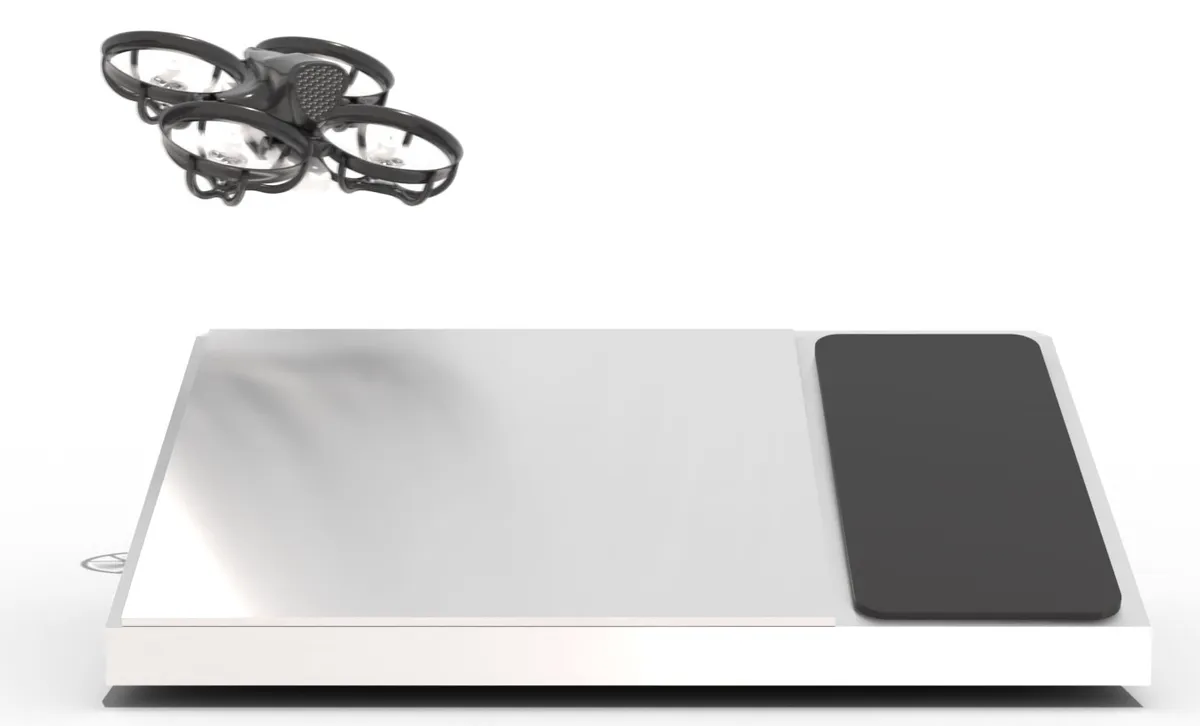
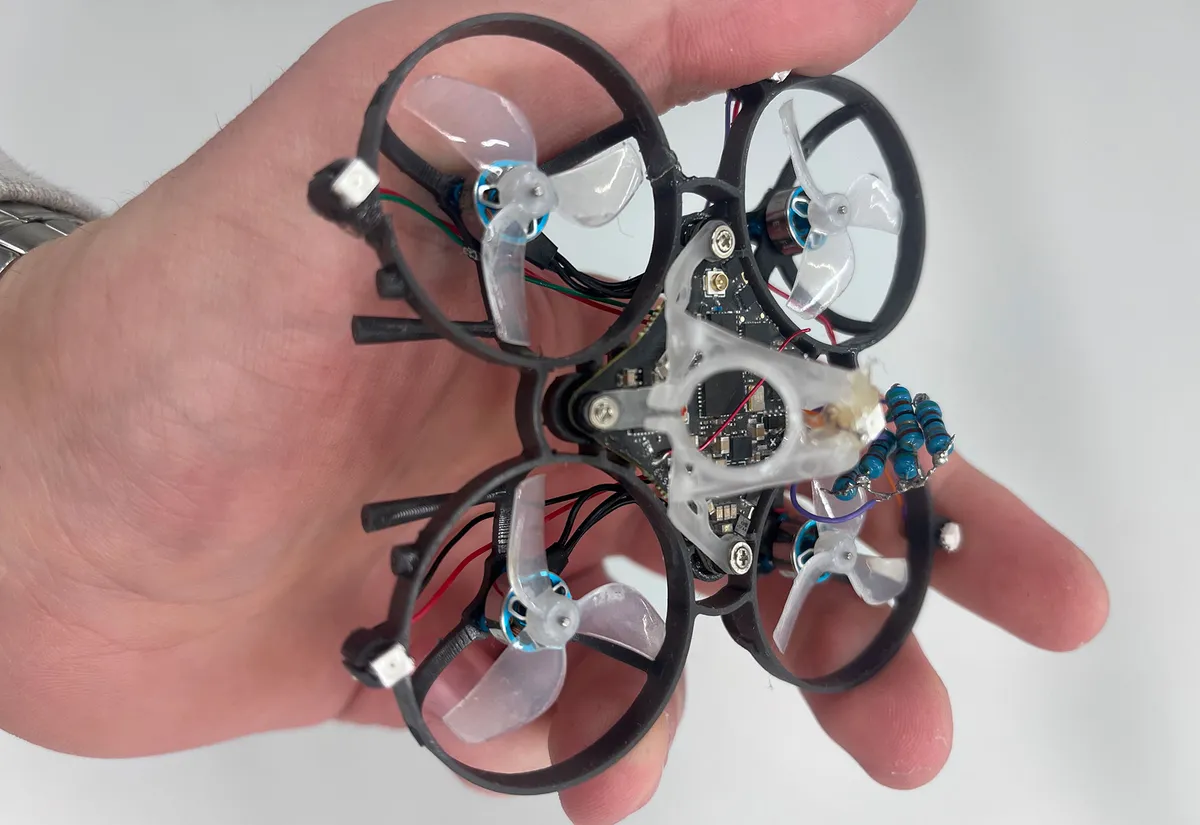
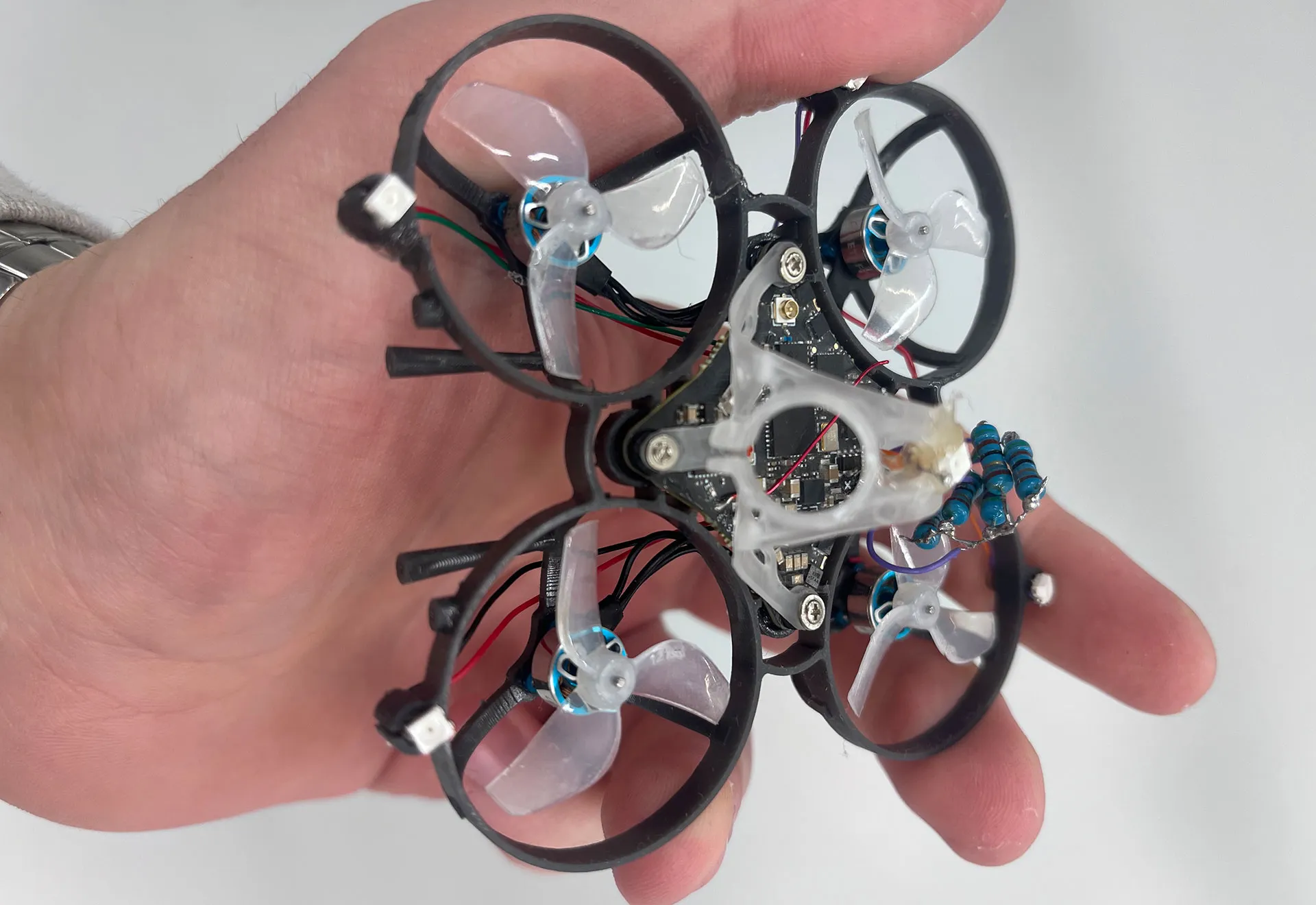
The ‘Tornyol’ is a 40g drone built to autonomously locate and eradicate mosquitoes.
A micro-drone designed to locate and eradicate mosquitoes has passed an important milestone. Tornyol Systems shared a video where the eponymous autonomous drone chalked up its first live air-to-air kill. For some reason (perhaps demonstration visibility), the 40g (1.4 ounce) drone’s first confirmed kill on video features a moth. Tornyol boldly claims that the demo shows a significant stride has been made “towards completely eradicating mosquitoes.”
Extremely excited to announce our first air-to-air kill of a flying moth by an autonomous micro-drone. This is a big step towards completely eradicating mosquitoes. pic.twitter.com/UhtNqwXCQIJuly 14, 2026
Tornyol Systems co-founder Alex Toussaint shared the above Tweet, congratulating the engineering team that has worked alongside him on the project. On the company website, there is a mosquito-hostile manifesto laid out, which provides insight into the company’s primary drone development goal.
“Mosquitoes are one of humanity's oldest and worst enemies. They kill more than 700,000 people each year — more than all current wars,” according to the firm’s mission statement. “More than 700 million people contract a mosquito-borne disease each year. They impact many countries, including the West, with thousands of cases of West Nile Virus in the US alone.” It aims to use technology, including this “small, inexpensive, and yet very fast” micro-drone, to “completely eradicate mosquitoes from areas where humans live.”
The underlying motivation of Tornyol Systems first became apparent back at Hackaday Supercon 2024 when Toussaint shared a presentation about How to Detect (and Kill) Mosquitoes With Off-the-Shelf Electronics.

Tornyol's technology
Since those initial presentations, it looks like the tech has been significantly refined and miniaturized. Currently, the platform is dependent on the LeSonar2 phased array sonar base station with 380 smartphone microphones and an Artix-7 FPGA to map the world in 3D.
This feeds the drone enough information to measure 0.1 mm movements and identify mosquitoes through their unique wingbeat signature. The micro-drone is sent commands by a PC, which also leverages “car park assist sensors, and some clever DSP” to seek and kill mozzies up to 8m (~26 feet) away.
We’ve previously reported on ground-based AI-enhanced mosquito zappers, but this is the first time we’ve seen an air-to-air solution. Tornyol says that it is rolling out deployment on embedded hardware “in the next few weeks.” I guess that's removing the need for a PC.
Get Tom's Hardware's best news and in-depth reviews, straight to your inbox.
U.S. residents interested in purchasing an autonomous Tornyol drone and base station are being asked to stump up a refundable $100 deposit. Then, there are two payment plans available. Choose a $50-a-month subscription or an “own it forever” $1,100 one-time fee.

Follow Tom's Hardware on Google News, or add us as a preferred source, to get our latest news, analysis, & reviews in your feeds.

Mark Tyson is a news editor at Tom's Hardware. He enjoys covering the full breadth of PC tech; from business and semiconductor design to products approaching the edge of reason.
-
Siorus The human suffering caused by mosquitoes doesn’t happen in isolation; they also constitute an important food source for a huge variety of animals, from fish to birds and bats.Reply
There are reasonable arguments to be made to experiment with the eradication of specific species that spread diseases to humans.
The case for eliminating the entire category of organisms is much thinner; there is a notably nonzero chance that total eradication of mosquitoes as a category could result in the collapse of entire ecosystems.
The developer’s choice of language as reported in this article calls into question whether he has any meaningful understanding of any of this.
Though, that being said, the concern is likely largely irrelevant because the biomass of mosquitoes is so large that population control via drone will never be practical.
Equally worth noting is that moths are not necessarily “harmless” as posited above. I have no idea what species this thing was tested on-and that specific species could very well be-but as a group, moths damage textiles, crops, etc. to the tune of several tens of billions of dollars annually on a global basis.
Some moth species are harmless, but some emphatically are not. Just like mosquitoes. -
bolweval My bug zapper kills 100's of them every night, and the mosquitos come to it in droves, ole school...Reply -
Zaranthos Replybolweval said:My bug zapper kills 100's of them every night, and the mosquitos come to it in droves, ole school...
Except it also kills literally every flying insect or creature small enough to touch the electrodes.
Give me an AI powered drone with a laser than can kill bugs and weeds on its kill list that parks in a solar powered nest to recharge. The buzzing of mosquitoes will be replaced by the buzzing of neighborhood drones.
I'm really not worried about these being a problem to the ecosystem or wildlife because they would cover a relatively small area where humans want them. -
bill001g Reply
Problem is bug zappers assume the insect is attracted to light. Mosquitos to some extent are but they primarily smell out CO2.bolweval said:My bug zapper kills 100's of them every night, and the mosquitos come to it in droves, ole school...
I wonder how many the drone can zap per second. Maybe in the house to get a stray ones that come in but outside I have seen swarms of hundreds. -
Darkhands ReplySiorus said:The human suffering caused by mosquitoes doesn’t happen in isolation; they also constitute an important food source for a huge variety of animals, from fish to birds and bats.
There are reasonable arguments to be made to experiment with the eradication of specific species that spread diseases to humans.
The case for eliminating the entire category of organisms is much thinner; there is a notably nonzero chance that total eradication of mosquitoes as a category could result in the collapse of entire ecosystems.
The developer’s choice of language as reported in this article calls into question whether he has any meaningful understanding of any of this.
Though, that being said, the concern is likely largely irrelevant because the biomass of mosquitoes is so large that population control via drone will never be practical.
Equally worth noting is that moths are not necessarily “harmless” as posited above. I have no idea what species this thing was tested on-and that specific species could very well be-but as a group, moths damage textiles, crops, etc. to the tune of several tens of billions of dollars annually on a global basis.
Some moth species are harmless, but some emphatically are not. Just like mosquitoes.
There are around 3,700 species of mosquitoes, but only a few hundred actually bite humans, and fewer than 100 are major carriers of disease.
A lot of people assume wiping out mosquitoes would collapse ecosystems, but most animals that eat them, birds, bats, fish, dragonflies, frogs, spiders, etc., aren't dependent on mosquitoes. They're generalist predators that just eat whatever insects are available.
The same goes for mosquito larvae. They're only one type of aquatic invertebrate, so if they disappeared, other insects like midges would probably fill a similar niche.
Even plants that mosquitoes pollinate usually have plenty of other pollinators, like bees, butterflies, and flies.
Because of all that, ecologists think eliminating just the disease-carrying species, like Aedes aegypti or Anopheles gambiae, would probably have little impact on ecosystems as a whole.
https://pubmed.ncbi.nlm.nih.gov/35294802/ -
JeffreyP55 Like my ex-wife, Mosquitos don't bother me. I have not been bitten years, by either.Reply -
Siorus Reply
Correct. Eliminating just the disease-causing species is broadly considered to be unlikely to cause an issue.Darkhands said:There are around 3,700 species of mosquitoes, but only a few hundred actually bite humans, and fewer than 100 are major carriers of disease.
A lot of people assume wiping out mosquitoes would collapse ecosystems, but most animals that eat them, birds, bats, fish, dragonflies, frogs, spiders, etc., aren't dependent on mosquitoes. They're generalist predators that just eat whatever insects are available.
The same goes for mosquito larvae. They're only one type of aquatic invertebrate, so if they disappeared, other insects like midges would probably fill a similar niche.
Even plants that mosquitoes pollinate usually have plenty of other pollinators, like bees, butterflies, and flies.
Because of all that, ecologists think eliminating just the disease-carrying species, like Aedes aegypti or Anopheles gambiae, would probably have little impact on ecosystems as a whole.
https://pubmed.ncbi.nlm.nih.gov/35294802/
That’s not a guarantee that it won’t, but I’d expect the likelihood of issues arising from addressing the handful of problematic species to be relatively small.
Small is, notably, not zero-though one could credibly argue it’s likely trivial here. But, whether it’s trivial or not, it’s not an argument against the undertaking in principle. Just an argument for gradual, local, monitored rollouts of mitigation strategies, which is basically what the plans I’m familiar with (like Google’s current proposal) do.